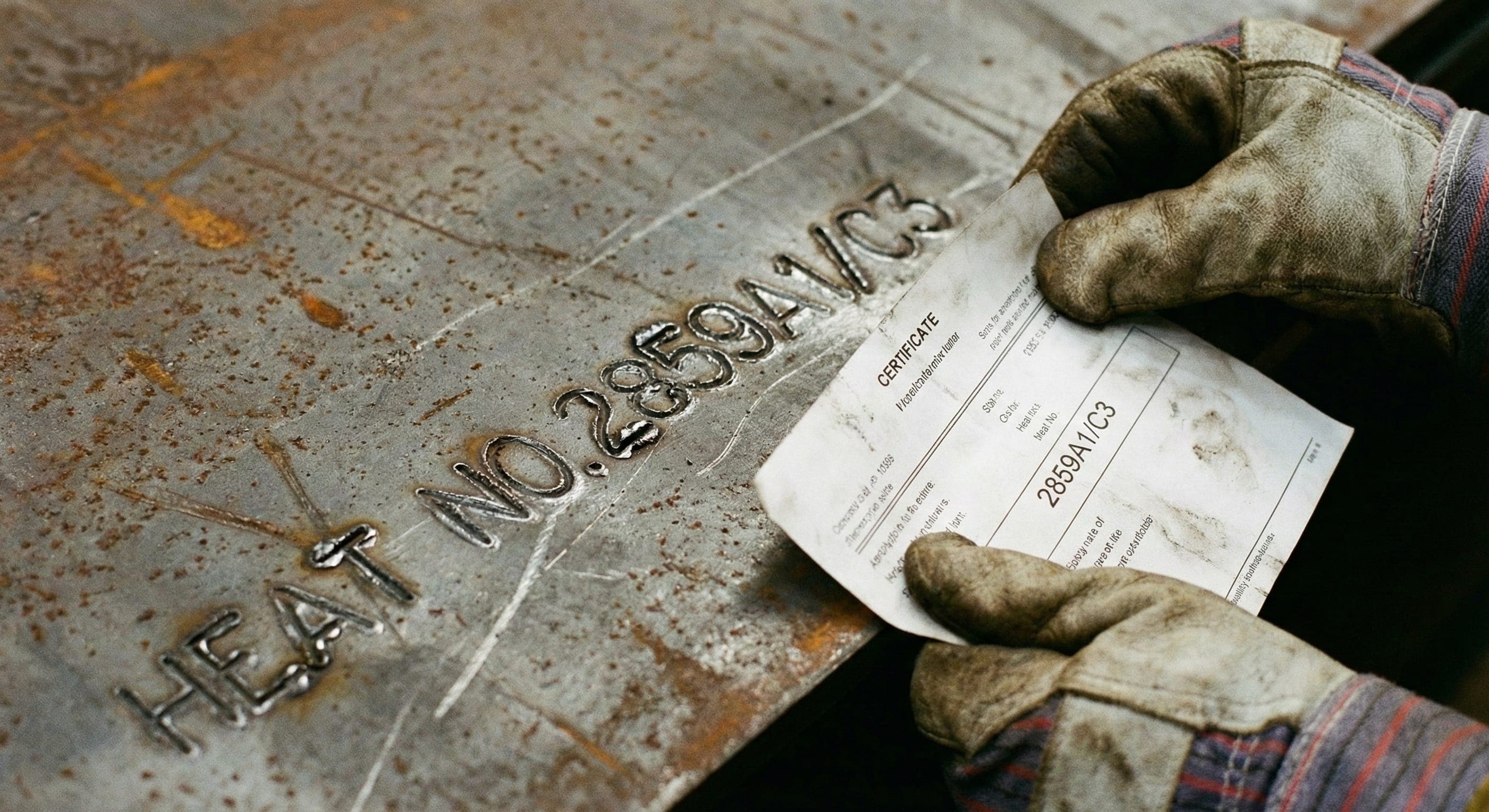
In the Indian steel market, "copy-paste" MTCs are alarmingly common. For critical infrastructure projects, accepting unverified material can lead to failed NDT tests and site shutdowns.
1. The 'Heat Number' Traceability
The Heat Number (or Cast Number) is the DNA of the steel. It represents the specific batch of molten metal from the blast furnace.
- On the MTC: Look for a 6-9 digit alphanumeric code.
- On the Product: Every genuine beam or plate from SAIL/JSW will have this number hard-stamped or painted on the flange/edge.
- The Trap: If the MTC says "Cast 12345" but the beam has no stamp, or a different number, reject the load immediately.
2. Chemical Composition Red Flags
A genuine IS 2062 E250 certificate will always adhere to strict chemical limits. Counterfeit MTCs often show values that look "too perfect" or violate standards.
Carbon (C): Max 0.23% (Higher carbon makes steel brittle)
Sulphur (S) & Phosphorus (P): Max 0.045% (The most critical check)
Carbon Equivalent (CE): Max 0.42% (Crucial for weldability)
Pro Tip: If an MTC shows Sulphur at 0.060%+, it is likely secondary steel being passed off as prime. High sulphur causes "hot shortness," leading to cracks during welding.
3. Digital Verification (QR Codes)
Modern mills like JSW and AMNS have introduced QR codes on their invoices and MTCs. Scanning this code takes you directly to the mill's SAP server. At J.M. Shah & Co., we encourage our clients' TPI (Third Party Inspectors) to perform this scan before the truck is even unloaded.