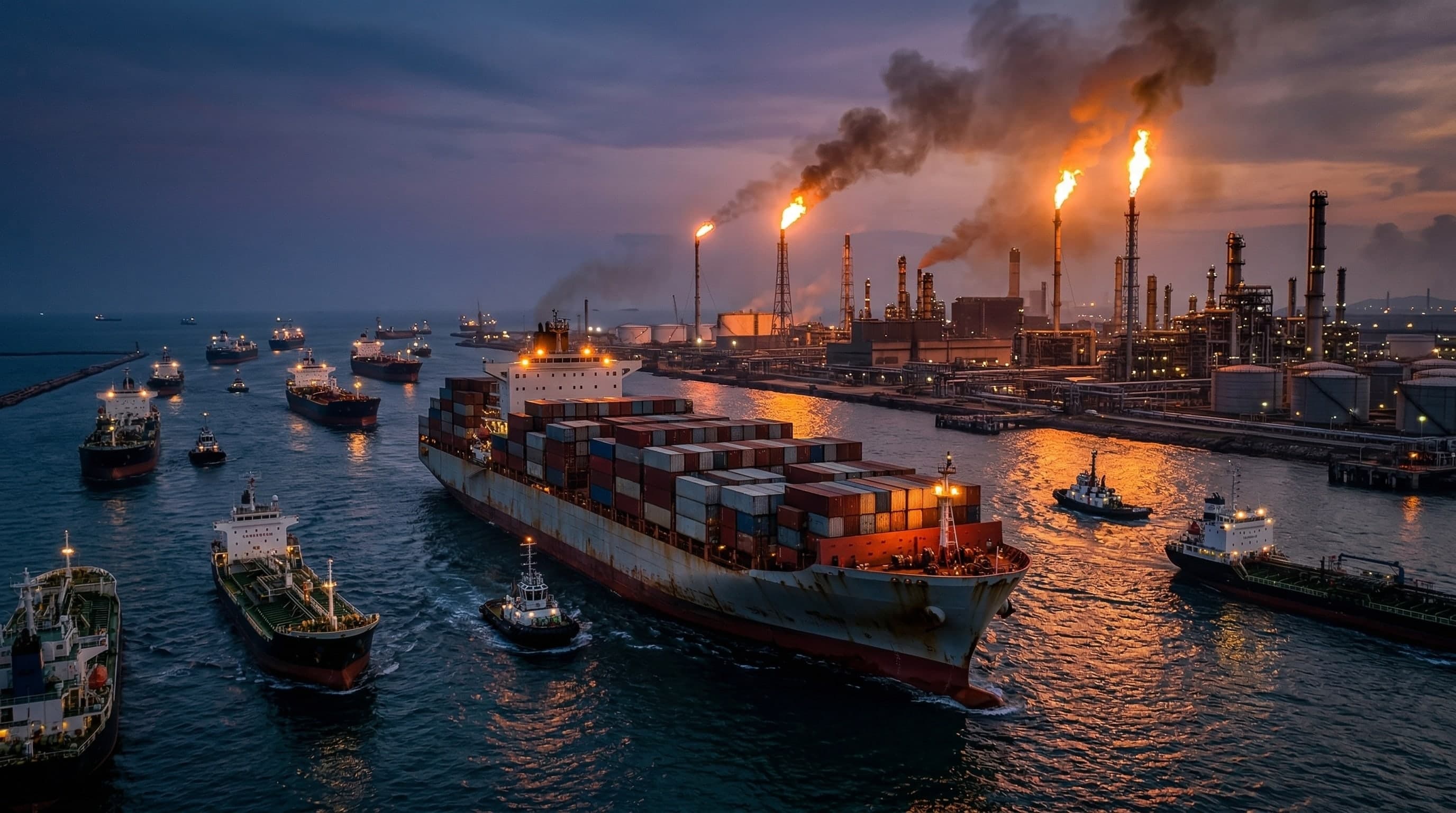
The geopolitical landscape has fundamentally shifted in Q1 2026. The escalating tensions between the US and Iran have resulted in severe blockages along critical Middle Eastern maritime routes, triggering a dual crisis in industrial gas supplies and global freight connectivity. For mega-infrastructure contractors, this translates to immediate and aggressive upward pressure on steel landed costs.
1. The Industrial Gas & Energy Surcharge
Steel manufacturing is an energy-intensive process. The restricted flow of natural gas through the Middle East has caused a sharp spike in industrial fuel costs. Primary integrated mills are already feeling the margin compression.
To maintain profitability, mills are implementing Energy Surcharges on new rolling schedules. For Direct Reduced Iron (DRI) plants, which rely heavily on natural gas, production costs have jumped significantly, impacting the baseline price of high-grade scrap and subsequent billet manufacturing.
2. The Freight Rate Explosion
The maritime blockage has forced major shipping lines to invoke Force Majeure clauses, rerouting vessels away from the Red Sea and the Strait of Hormuz.
- Extended Transit Times: Rerouting vessels around the Cape of Good Hope adds 12 to 18 days to standard delivery schedules.
- War-Risk Premiums: For vessels that do attempt Middle Eastern corridors, marine insurance operators are levying unprecedented war-risk premiums, which are passed directly to the buyer's CIF (Cost, Insurance, and Freight) pricing.
- Container and Vessel Shortages: The extended loop times mean ships are tied up longer, creating a critical shortage of available bulk break vessels at Indian ports.
Strategic Procurement: Hedging the Crisis
In a volatile market, "wait and watch" is the most expensive strategy. EPCs must transition from spot buying to strategic hedging.
The J.M. Shah & Co. Mitigation Strategy
Our trade desk is actively shielding our contracted partners from these geopolitical shocks. By leveraging our long-standing MoUs with primary producers, we are locking in Q2 base prices before further energy surcharges take effect. Furthermore, our Export Logistics division utilizes pre-negotiated freight contracts to bypass the spot-market vessel panic, ensuring your project timelines and budgets remain insulated from Middle Eastern volatility.