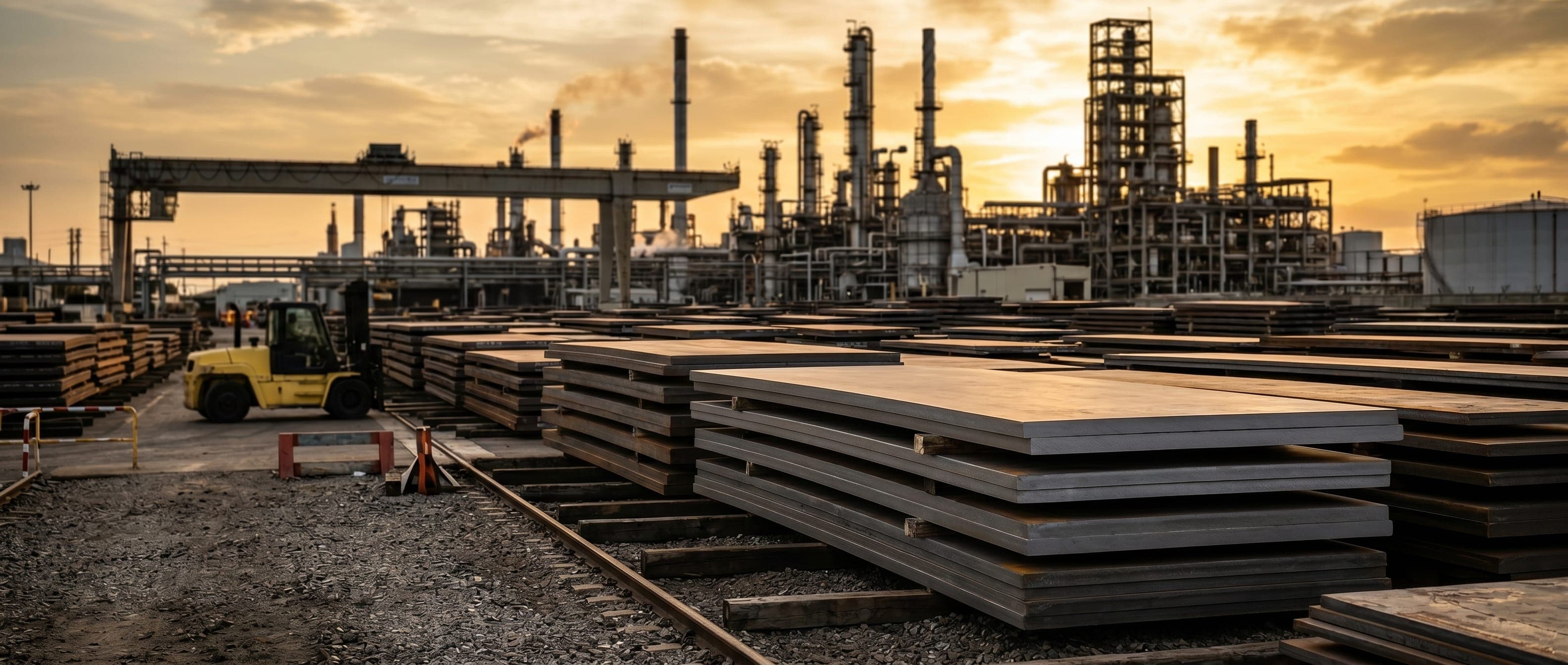
When procuring steel for pressure vessels, industrial boilers, and petrochemical refineries, the margin for metallurgical error is strictly zero. Boiler Quality (BQ) plates are engineered to withstand extreme internal pressure, high temperatures, and corrosive environments.
For EPC contractors executing mega-refinery or power plant projects, sourcing these plates from the secondary market introduces catastrophic risk. Here is how Tier-1 procurement teams manage BQ plate supply chains to ensure absolute compliance.
ASTM A516 vs. IS 2002: The Standards Matrix
Depending on the project consultant (often EIL or global equivalents), BOQs typically demand either Indian Standard or American Standard specifications.
- ASTM A516 (Grades 60, 65, 70): The global benchmark for carbon steel plates intended primarily for service in welded pressure vessels where improved notch toughness is important. Grade 70 is the most commonly procured for high tensile strength requirements.
- IS 2002 (Grades 1, 2, 3): The Indian standard equivalent, frequently mandated in domestic government power and infrastructure tenders.
The Non-Negotiable: UT Testing and MTC Correlation
Visual inspection is useless for BQ plates. Internal defects like laminations, inclusions, or porosity can cause catastrophic blowouts under high pressure. Tier-1 EPCs mandate Ultrasonic Testing (UT) as per ASTM A435 or A578.
As authorized distributors, we ensure that every single BQ plate dispatched from primary mills (SAIL, AM/NS, JSW) is accompanied by a genuine Mill Test Certificate (MTC) that perfectly correlates with the physical heat number stamped on the plate, ready for immediate Third-Party Inspection (TPI) clearance by agencies like SGS or Bureau Veritas.
Need Mill-Direct BQ Plates?
We orchestrate the supply of heavy BQ plates directly from India's primary manufacturers to your fabrication site, ensuring zero warehousing delays and 100% compliance.
Request a Commercial Offer