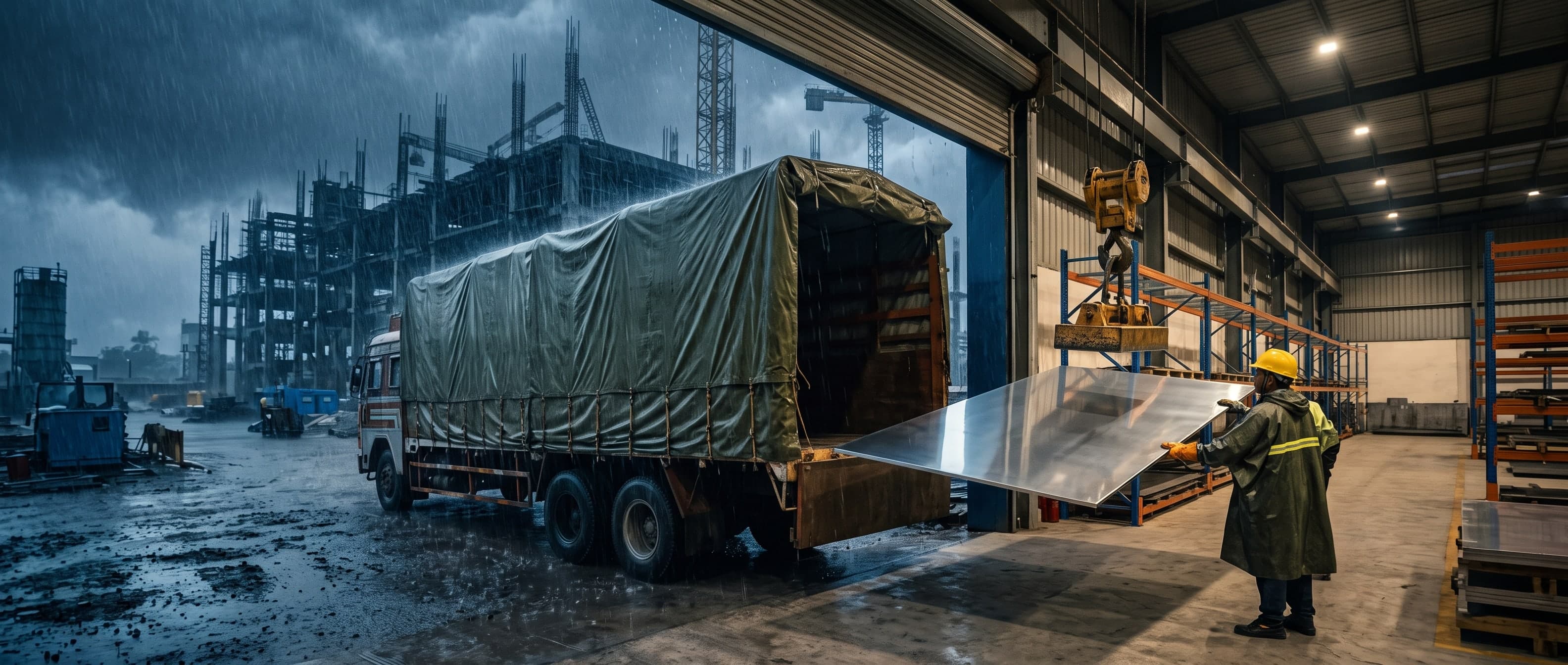
Executing heavy infrastructure projects during the Indian monsoon season (July–September) is notoriously difficult. While site engineers focus on de-watering foundations, procurement heads face a quieter but equally destructive threat: atmospheric corrosion in the supply chain.
The Danger of the Open Stockyard
Standard steel traders hold inventory in massive, open-air yards. During the monsoons, structural beams, channels, and plates sit in standing water and high humidity for weeks. This exposure causes aggressive surface rusting, pitting, and the degradation of mill-applied protective scales.
When this weather-damaged steel arrives at a Tier-1 EPC site, it triggers severe consequences:
- Failed QA/QC Inspections: Severely pitted Boiler Quality (BQ) plates frequently fail mandatory Ultrasonic Testing (UT).
- Exploding Labor Costs: Site fabrication crews must spend hundreds of hours shot-blasting, grinding, and wire-brushing the rusted material before primary primer coats can adhere.
- Weakened Weld Integrity: Excessive surface moisture and rust drastically increase the risk of hydrogen-induced cracking during structural welding.
The Direct-Dispatch Shield
J.M. Shah & Co. completely bypasses the stockyard rust trap. Our procurement architecture ensures that steel is loaded at the primary mill's covered dispatch bays, transported via heavy-duty logistics, and delivered straight to your site's protected laydown area.
By utilizing just-in-time (JIT) direct delivery, your fabrication teams receive pristine, mill-fresh material, entirely eliminating the costly delays associated with weather-damaged secondary inventory.
Secure Monsoon Deliveries
Stop paying for pre-rusted steel. Route your Q3 BOQs through our direct-dispatch network.
Route Your Q3 BOQ