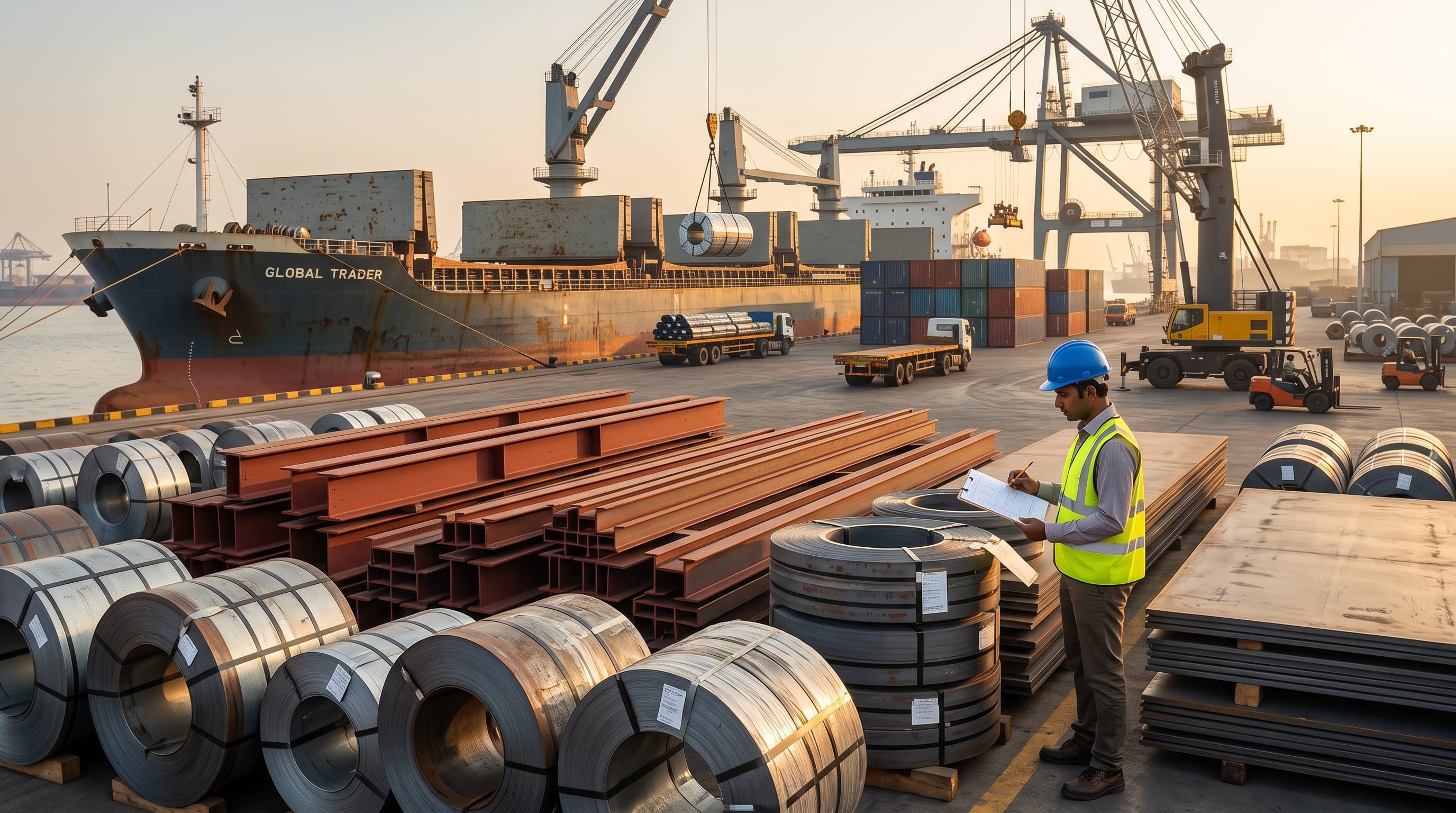
India's steel export market received a significant development on September 14, 2026. Under the India-European Union Free Trade Agreement, Indian steel exporters will receive access to an annual quota of approximately 1.64 million tonnes for shipments to the European Union.
The agreement creates a larger and more predictable route into one of the world's most important steel markets.
But there is an important catch: the quota does not remove the EU's Carbon Border Adjustment Mechanism (CBAM) costs.
For Indian steel producers, exporters and international EPC procurement teams, this means the opportunity is real, but competitiveness will increasingly depend on product mix, quota availability, origin compliance and carbon documentation.
What Has India Secured?
Reuters reported on September 14 that India will be able to export up to 1.64 million metric tonnes of steel annually to the European Union under the new FTA.
The figure combines:
| Component | Annual Quantity |
|---|---|
| Existing WTO quota | 946,616 tonnes |
| Additional preferential quota under FTA | 694,853 tonnes |
| Combined access | 1.64 million tonnes |
Reuters reported that the combined quota represents around 68.4% of India's 2.4 million tonnes of steel exports to the EU in 2025, compared with 39.4% under the existing quota structure.
Why Is This Important for Indian Steel?
Europe is not simply another export market.
European buyers typically operate with demanding requirements around:
- Product standards
- Traceability
- Quality documentation
- Country of origin
- Environmental reporting
- Carbon intensity
- Delivery reliability
A larger quota therefore rewards exporters that can provide not just competitive steel prices, but a complete compliance and documentation package.
Most of the Opportunity Is in Flat Steel
The quota is particularly relevant to flat-steel exporters.
Reuters reported that hot-rolled sheets and strips received the largest allocation, at approximately 509,605 tonnes.
That matters because flat products such as HRC are already experiencing strong domestic and export-market interest.
BigMint reported on September 11 that Indian HRC export offers to the EU had risen to approximately $640/tonne FOB, a four-month high, supported by stronger domestic realisations and limited mill availability.
The Catch: CBAM Still Applies
This is the part exporters should not overlook.
The preferential quota does not exempt Indian steel from the European Union's Carbon Border Adjustment Mechanism.
CBAM means that the carbon emissions associated with imported steel remain a commercial consideration even when the shipment qualifies for preferential market access.
In other words:
More quota does not automatically mean cheaper steel.
Exporters still need to manage carbon-related costs, documentation and compliance with EU requirements.
What Happens Above the Quota?
This is another critical point for exporters.
Reuters reported that steel shipments above the applicable quota would face the EU's 50% tariff, based on analysis of the agreement's legal text.
The quota therefore needs to be treated as a strategic commercial resource.
Exporters cannot simply assume that an attractive European selling price will remain attractive after the quota is exhausted.
What Indian Steel Exporters Should Do Differently
1. Build Quota Awareness Into Commercial Offers
European quotations should consider not only FOB material cost and freight, but also the relevant quota position and applicable destination charges.
2. Prioritise Higher-Value Products
A constrained export quota makes product selection more important.
Indian producers and exporters may have greater commercial incentive to focus on products where Indian mills have strong quality capabilities and European buyers value reliable specifications, documentation and consistency.
3. Strengthen Carbon Documentation
For EU-facing procurement, an MTC alone is no longer the complete documentation story.
Buyers increasingly need confidence around the steel's production route, embedded emissions and applicable carbon reporting.
4. Maintain Complete Mill Traceability
Export supply chains should maintain an unbroken relationship between:
Purchase Order → Mill → Heat Number → MTC → Inspection → Shipment → Certificate of Origin → EU Import
Documentation mistakes that might be inconvenient in a domestic transaction can become expensive in an international shipment.
Why the EU Development Also Matters to Domestic Indian Buyers
This announcement isn't only relevant to exporters.
If Indian mills find stronger export realisations into Europe, they may have greater incentive to allocate some production toward export markets.
That becomes particularly relevant when domestic demand is already improving.
The Ministry of Steel reported finished-steel consumption of 70.3 million tonnes during April-August 2026, up 7.0% year-on-year.
At the same time, India imported 3.487 million tonnes of finished steel during the period, up 29.5%.
The combination of strong domestic consumption and improved export access creates a market worth watching closely.
The Strategic Question for Indian Steel
India's steel industry is moving into a more complicated global environment.
On one side:
- Domestic steel demand is growing.
- Infrastructure activity remains strong.
- Indian HRC prices have strengthened.
- European market access is improving.
On the other:
- Global steel overcapacity remains a concern.
- Imports into India are rising.
- European carbon costs remain relevant.
- Quota utilisation will matter.
- International freight and energy costs remain volatile.
What This Means for Global EPC Procurement
International EPC companies sourcing steel from India should evaluate suppliers on more than price.
A robust export procurement process should verify:
- Mill: Confirm the actual producing mill and approved make requirements.
- Specification: Confirm IS, ASTM, EN or project-specific standards.
- Traceability: Ensure heat numbers match the MTC.
- Origin: Verify the applicable rules of origin.
- Inspection: Coordinate TPI where required.
- Carbon: Understand the documentation needed for CBAM compliance.
- Quota: Confirm whether the shipment falls within the applicable EU quota.
- Logistics: Compare FOB/CFR/CIF landed economics rather than only ex-mill pricing.
What Should Indian Steel Exporters Watch Next?
| Factor | Why It Matters |
|---|---|
| FTA implementation | Determines when additional quota becomes available |
| EU quota utilisation | Determines remaining duty-preference capacity |
| CBAM | Directly affects landed economics |
| Indian HRC prices | Determines export competitiveness |
| Global steel prices | Affects relative competitiveness against other origins |
| Freight rates | Can materially change delivered cost |
The Bottom Line
The India-EU steel agreement is a meaningful opportunity for Indian steel exporters.
The additional 694,853-tonne preferential quota, combined with the existing 946,616-tonne quota, takes potential annual access to approximately 1.64 million tonnes.
But the commercial opportunity should not be reduced to one headline number.
Successful EU steel exports will increasingly depend on: product selection, quota management, mill traceability, documentation, carbon compliance and landed-cost discipline.
For Indian exporters and international EPC buyers, this is the beginning of a more sophisticated steel trade environment rather than simply a new tariff story.
Export Steel From India With Project-Level Documentation
International steel procurement requires coordination between the producing mill, quality documentation, inspection, logistics and destination requirements.
J.M. Shah & Co. has an established export division focused on international steel procurement and logistics, including structural steel and other specification-grade products.
For an export requirement, provide the required specification, quantity, destination, delivery terms and project documentation requirements so the supply chain can be evaluated on a complete landed-cost basis.
Planning an International Steel Requirement?
Share your specification and destination with our export team.
Discuss Your RequirementFrequently Asked Questions
How much steel can India export to the EU under the new FTA?
The agreement provides combined annual quota access of approximately 1.64 million tonnes, consisting of an existing 946,616-tonne WTO quota and an additional 694,853-tonne preferential quota under the FTA.
Does the India-EU steel quota remove CBAM?
No. The preferential quota does not exempt Indian steel from the EU's Carbon Border Adjustment Mechanism. Carbon-related costs and compliance requirements remain relevant.
Which Indian steel products benefit most from the EU quota?
The quota covers multiple steel categories, with hot-rolled sheets and strips receiving the largest allocation reported so far at approximately 509,605 tonnes.
What happens if Indian steel exports exceed the EU quota?
Steel shipments outside the applicable quota can face the EU's higher tariff regime. Exporters should therefore monitor quota availability before finalising shipment economics.
Why is this important for Indian steel buyers?
Greater export access can strengthen the commercial attractiveness of Indian steel producers in overseas markets. If export realisations remain attractive while domestic demand is strong, procurement teams should monitor mill allocation, availability and domestic pricing closely.
Sources: Reuters reporting on the India-EU steel quota, BigMint market intelligence, and Ministry of Steel / PIB data.